Beth contracts scarlet fever
Little WomenBeth contracts scarlet fever after going alone to help the Hummel family, turning private kindness into a danger that reaches the March household. Her illness reorganizes the family’s time and responsibilities, reveals the limits of their medical understanding, and teaches Margaret March, Josephine March, and the other members of the family to recognize how much love and moral steadiness had quietly depended on Beth.
Causes and Exposure
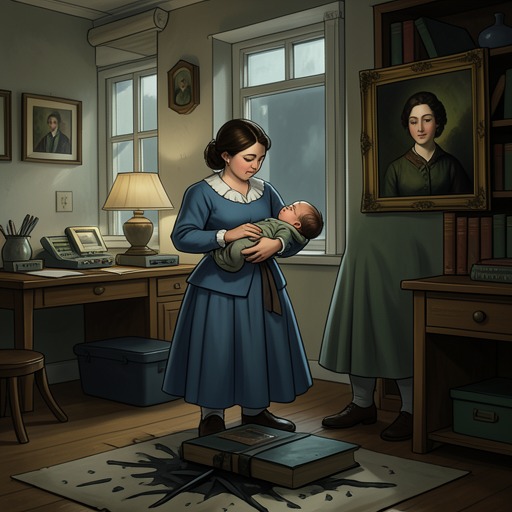
Beth’s illness begins with an act of neglected duty rather than with deliberate recklessness. When the other girls fail to visit the Hummel children, Beth fills a basket with odds and ends for them, puts on her hood, and goes out into the cold despite her headache. She returns late, slips into her mother’s room, and is found with red eyes and a camphor bottle. The fever is first linked to the death of the Hummel baby, whom Beth held in her lap until Mrs. Hummel returned with the doctor.
The scene also establishes the unequal conditions surrounding the disease. Mrs. Hummel explains that poverty had forced her to try to cure the baby herself and that medical help came too late. The doctor identifies scarlet fever in the household and warns Beth to take belladonna immediately because her headache, sore throat, and strange bodily feelings may be its first symptoms. Beth has already consulted her mother’s medical book and taken the medicine, but her attempt to manage the danger herself reflects both her practical resourcefulness and the family’s vulnerable dependence on household knowledge.
Course of the Illness
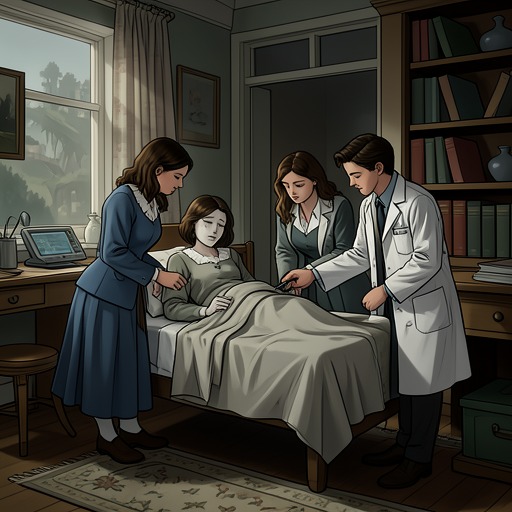
Beth does contract scarlet fever, and the illness is far more serious than the girls initially understand. Hannah and the doctor recognize the gravity of the situation while the younger members of the household remain largely ignorant of illness. Mr. Laurence is kept away, the doctor does what he can, and Hannah becomes the principal nurse. Margaret March stays home to avoid infecting the Kings, while Josephine March gives herself to Beth’s bedside day and night.
The fever gradually strips Beth of ordinary consciousness. During its worst fits she speaks in a hoarse, broken voice, plays on the coverlet as if it were her beloved little piano, and tries to sing despite a swollen throat that can produce no music. She mistakes familiar faces for other people and calls imploringly for her mother. Her physical disorientation makes the illness more than a period of suffering: it interrupts the family’s ordinary ways of knowing Beth and forces them to confront the possibility that the quiet sister who has held the home together may not recover.
Beth’s own concern remains directed outward even while she is sick. She keeps old Joanna beside her, remembers her vulnerable animals, sends loving messages to Amy Curtis March, and worries that her father might think she has neglected him. She asks for pencil and paper so that she can write to him, but her intervals of awareness soon disappear. The fever therefore reveals a continuity between Beth’s healthy character and her condition as a patient: even when her body fails, her attention is still occupied by the needs and feelings of others.
Crisis and Family Response
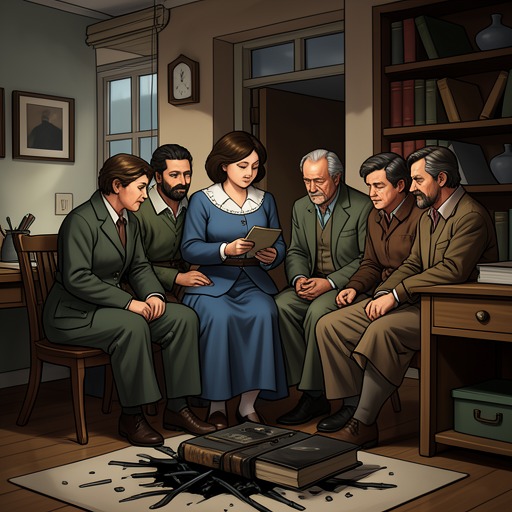
The crisis deepens when a letter reports that Mr. March has suffered a relapse and cannot yet come home. The March household is consequently divided between two forms of anxiety: the father remains ill and far away, while Beth lies dangerously sick at home. The family’s usual reliance on parental protection becomes impossible, and the sisters must act within the limited knowledge and authority available to them.
On the first of December, Dr. Bangs examines Beth at length, holds her hot hand, and quietly tells Hannah that Mrs. March should be sent for if she can leave her husband. The warning changes the family’s understanding of the illness. Josephine March runs into the storm to send the telegram, while Laurie arrives with news that Mr. March is improving. That relief cannot cancel the danger to Beth. Josephine tells Theodore Laurence that Beth no longer knows them, no longer speaks of the green doves she once imagined in the vine leaves, and no longer looks like herself. Her despair is intensified by the absence of both parents and by the feeling that divine help has become remote.
The family’s care is therefore both practical and emotional. Hannah remains with Beth at night, the doctor visits twice a day, Margaret March maintains the household, and Josephine March refuses to leave the bedside. Mrs. March’s earlier instruction to hope and keep busy acquires its full meaning here: work is not an escape from grief but a discipline that keeps the household functioning while its members wait for news. The illness also makes visible a wider network of concern. Laurie repeatedly haunts the house, Mr. Laurence locks the grand piano because it reminds him of Beth, local tradespeople ask after her, and neighbors send comforts and good wishes.
Recovery, Relapse, and Lasting Change
Beth survives the immediate scarlet-fever crisis, but recovery does not restore her former strength. When Josephine March returns in the spring, she sees a change that those who live with Beth every day have scarcely noticed. Beth is only a little paler and thinner than before, yet she has acquired a transparent, fragile appearance, as if the mortal part of her were slowly being refined away. The illness thus functions as an early revelation of a deeper decline rather than as a self-contained episode.
Josephine takes Beth to the seashore, where the open air and sea breezes may bring color back to her cheeks. Beth does not want to travel far from home, and the two sisters remain largely withdrawn from society, preferring to live for one another. Their closeness has a bittersweet quality: they are “all in all to each other,” while the people around them instinctively sense that a long separation is approaching. The fever has changed not only Beth’s body but also the emotional scale of the family, making every ordinary visit and shared day feel provisional.
Beth’s illness also changes the sisters’ moral perception. During the dark days of the fever, Margaret March recognizes that love, protection, peace, and health are blessings more valuable than any luxury. Josephine comes to understand the beauty of Beth’s unselfish ambition to live for others and make home happy through simple virtues rather than talent, wealth, or beauty. Amy, separated from the household, longs to return and work for Beth, remembering with regret how many neglected tasks Beth’s willing hands had performed for her. The disease converts unnoticed service into acknowledged moral authority.
Significance and Ending
Beth’s scarlet fever is a medical event, a family crisis, and a narrative threshold. It begins in the Hummel home, where poverty and delayed treatment make the disease fatal for the baby, and enters the March household through Beth’s compassionate contact with suffering. The contrast prevents the illness from becoming merely a private symbol: it is also shaped by material hardship, incomplete medical knowledge, and the uneven availability of care.
At the same time, the episode establishes the emotional pattern of Beth’s later decline. Her fever makes the family confront the possibility of losing her; her apparent recovery leaves behind a visibly weakened body; and the family’s renewed attentiveness cannot reverse the course that has begun. When Beth later dies, her parents guide her through the Valley of the Shadow, and her death is described as the culmination of a long movement toward quiet surrender rather than as a sudden interruption. The scarlet fever crisis is therefore the first unmistakable stage in the process by which Beth’s patient, loving presence becomes inseparable from the family’s experience of grief.
The event also redistributes responsibility among the survivors. Josephine’s bedside devotion prepares her for the later burden of living without Beth, while Mrs. March’s model of controlled anger, patient labor, and steadfast care supplies an ethical vocabulary for enduring loss. After Beth’s death, Josephine cries out for her sister and is comforted by her mother; grief becomes a force that chastens sorrow and strengthens love. Beth’s illness makes that transformation possible by revealing, before her final departure, how deeply her quiet goodness has entered every relationship around her.